Macro Photography: How to Photograph Insects and Ants
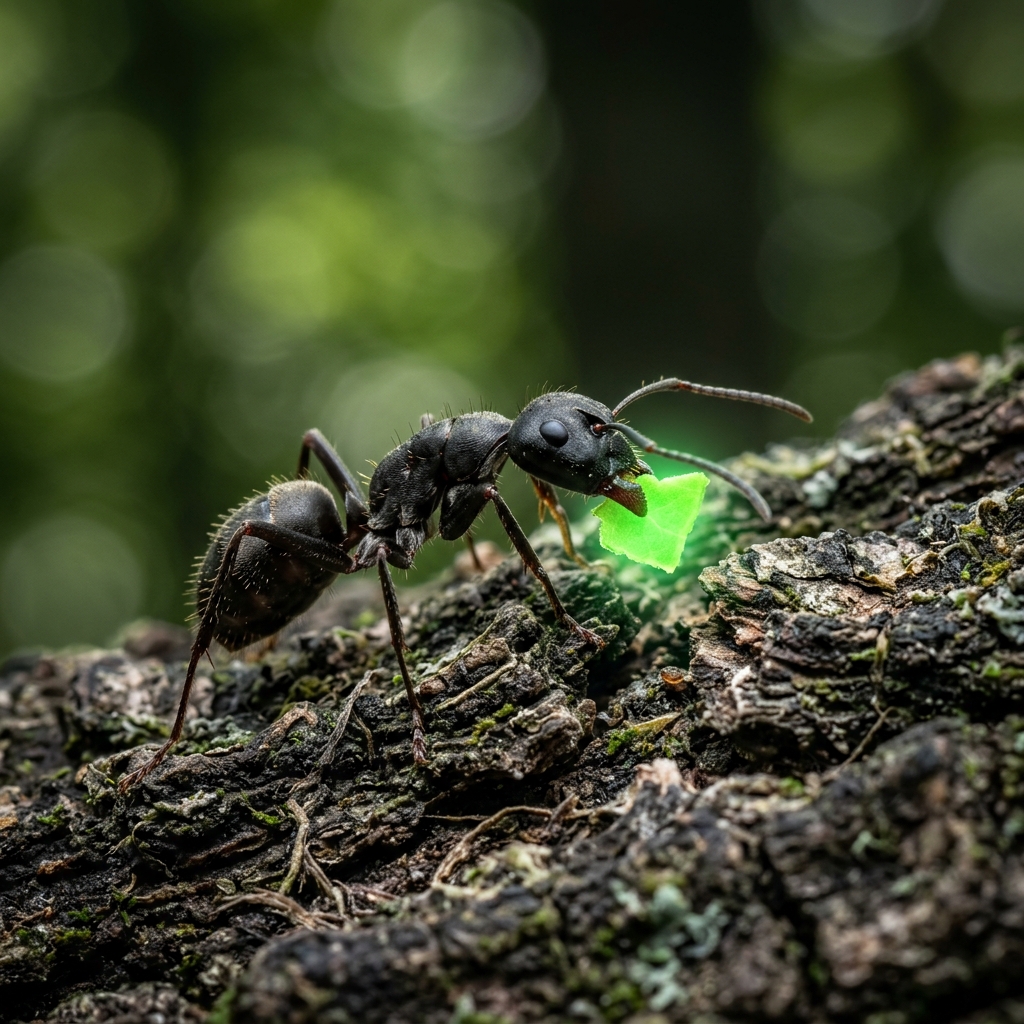
Entering the Alien World
One of the greatest joys of photography is its ability to show us a world that is completely invisible to the naked human eye. You don't need to travel to the Amazon rainforest to find terrifying, alien-looking monsters with massive mandibles and armored plates; you just need to walk into your backyard and look at a leaf. Macro photography—the art of taking extreme close-up photos of tiny subjects—is one of the most accessible and wildly fascinating genres of photography.
My absolute favorite subjects to photograph in the macro world are ants. They are incredibly strong, relentlessly busy, and completely ignore you while you photograph them. I once spent two hours lying flat on my stomach in the dirt, watching a colony of leafcutter ants dismantle a fallen flower petal. When you view a macro photograph of an ant carrying a bright green leaf in its jaws, covered in microscopic hairs, with the background blurred out into beautiful bokeh, you realize that there is a massive, epic drama happening beneath our feet every single day.
The Gear: You Need a True Macro Lens
You cannot shoot true macro photography with the standard lens that came with your camera. Standard lenses have a Minimum Focusing Distance, which means if you get too close to a bug, the lens will physically refuse to focus, and the image will be a giant blur.
You need to purchase a dedicated Macro Lens. These lenses are engineered with special optics that allow you to push the glass of the lens just an inch or two away from your subject and still achieve perfect, razor-sharp focus. A true macro lens will have a magnification ratio of at least "1:1", which means the insect will be projected onto your camera's digital sensor at its actual, life-size physical dimensions. The most popular focal lengths for insect macro lenses are 90mm, 100mm, or 105mm. These longer focal lengths allow you to get extreme magnification without having to physically shove your camera directly into the insect's face and scare it away.
The Depth of Field Nightmare
When you begin shooting macro, you will instantly run into a terrifying physics problem: Depth of Field. As we learned in previous articles, zooming in and getting extremely close to a subject causes the background to blur. In macro photography, you are getting SO close to the subject that your depth of field (the slice of the photo that is actually in focus) shrinks to the size of a human hair.
If you shoot an ant at f/2.8, the ant's left eyeball will be in perfectly sharp focus, but its right eyeball, its antennae, and its body will be completely blurred out into mush. To fix this, you must "stop down" your lens to an extremely narrow aperture. You will frequently shoot macro photography at f/11, f/16, or even f/22 just to get the entire insect in focus.
The Flash is Mandatory
Because you are forced to shoot at f/16 to get the insect in focus, the hole letting light into your camera is incredibly tiny. If you are shooting in the shade of a bush or under a leaf, your photo will be pitch black. Furthermore, insects move incredibly fast; an ant never stops walking. To freeze its motion, you need a fast shutter speed (like 1/250th of a second).
Narrow aperture + fast shutter speed + shade = you need a massive amount of artificial light. You must use a flash. But you cannot simply blast a bare flash at a bug; it will create harsh, ugly white highlights on their shiny exoskeletons. You must buy or build a small, DIY flash diffuser (like a mini softbox) that attaches to the end of your lens. This creates a beautiful, soft, wrapping light that illuminates the insect perfectly while freezing its rapid motion.
Focusing: Throw Away the Autofocus
When you are shooting at 1:1 magnification, your camera's autofocus system is completely useless. It will frantically hunt back and forth, entirely unable to lock onto a tiny, moving ant.
To shoot macro insects, you must switch your lens to Manual Focus. But here is the secret trick: do not actually turn the focus ring! Set the focus ring to the absolute closest magnification distance (1:1), and leave it there. Hold the camera steady, look through the viewfinder, and physically rock your entire body forward and backward by a millimeter at a time. You will see the insect slide in and out of focus as you move your body. When the insect's eye suddenly pops into razor-sharp focus, hold your breath, and press the shutter button. It requires practice, patience, and a lot of deleted photos, but when you finally nail that perfect, hyper-detailed shot of an alien world, it is incredibly rewarding.


Comments
Post a Comment