Lighting 101: Hard Light vs. Soft Light
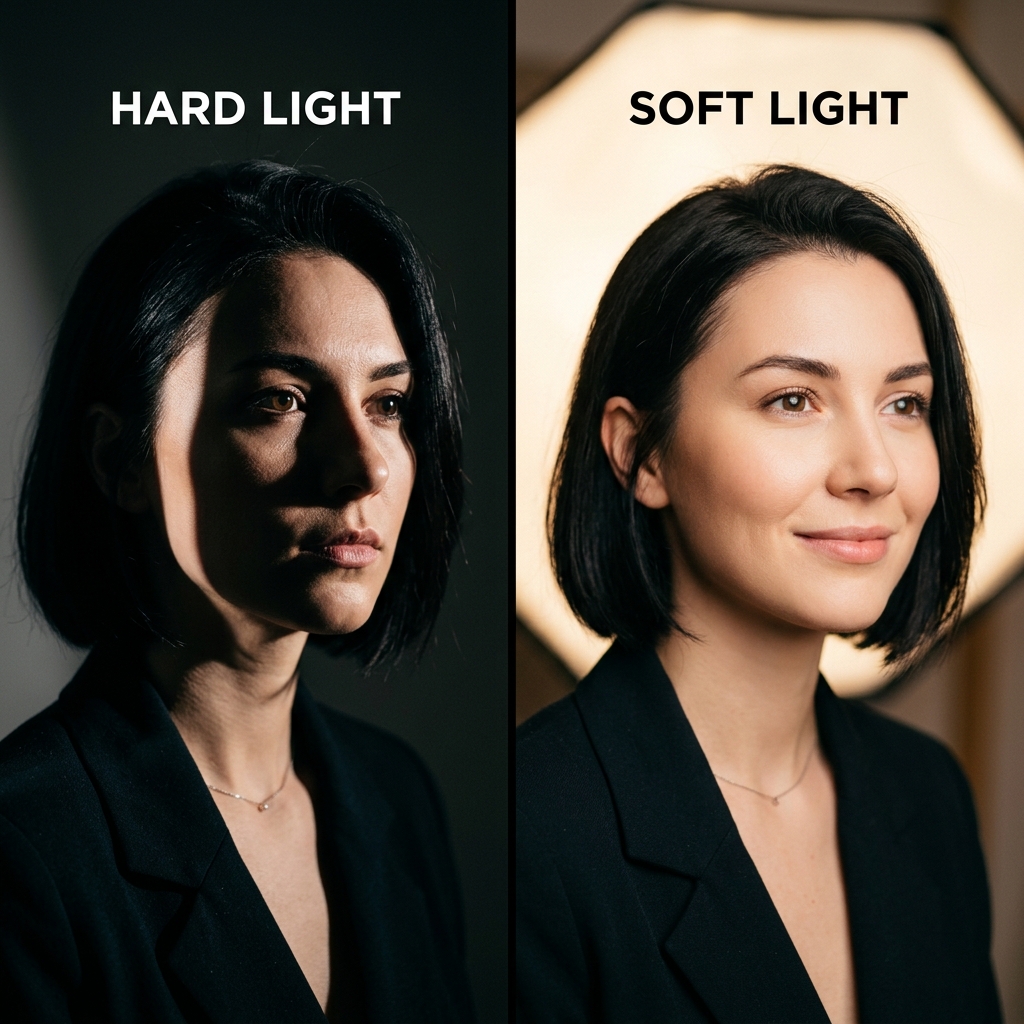
The Two Languages of Light
When I first started dabbling in studio photography, I bought a cheap lighting kit online. It came with a bare flashbulb on a stand. I pointed the flash directly at my model, took the photo, and was horrified. She looked like a deer caught in the headlights of a semi-truck. The shadows under her chin were pitch black and razor-sharp. Every pore and imperfection on her skin was highlighted in terrifying detail. I thought my camera was broken, but I had simply failed to understand the most fundamental concept in lighting: the difference between hard light and soft light.
Light speaks two different emotional languages. Hard light screams drama, tension, and grittiness. Soft light whispers romance, beauty, and tranquility. As a photographer, if you do not know how to identify and control these two types of light, you are completely at the mercy of your environment.
What is Hard Light?
Hard light is defined by the shadows it creates. If you look at a shadow cast by an object and the edge of that shadow is sharp, defined, and creates a harsh line between light and dark, you are dealing with hard light.
Where does it come from? Hard light comes from a light source that is relatively small compared to the subject. The best example is the sun on a clear, cloudless day at noon. Even though the sun is massive, it is 93 million miles away, making it appear as a tiny, pinpoint dot in the sky. Other examples of hard light include the flash on your smartphone, a bare lightbulb in a dark room, or a direct spotlight on a theater stage.
When should you use it? Because hard light is so harsh, it is generally terrible for standard portraits. It creates ugly "raccoon eyes" (deep shadows in the eye sockets) and highlights wrinkles. However, hard light is incredible for creating high-contrast, edgy, dramatic portraits (like a moody black-and-white photo of a rockstar). It is also fantastic for street photography and architectural photography, as the sharp shadows carve out beautiful geometric shapes and heavy textures on buildings.
What is Soft Light?
Soft light is the holy grail for portrait, wedding, and fashion photographers. If you look at a shadow and it features a smooth, gradual transition from light to dark with fuzzy, blurry edges, you are looking at soft light. Soft light wraps around its subject, filling in wrinkles, smoothing out skin, and creating a highly flattering, glowing effect.
Where does it come from? Soft light comes from a light source that is massively large compared to the subject. Remember how the sun on a clear day is hard light? If a layer of thick clouds rolls in, those clouds act as a giant diffusion panel. They scatter the sun's rays, turning the entire sky into one massive, glowing light source. This is why overcast days provide the most beautiful, flattering natural light for outdoor portraits.
How to Soften Hard Light
You don't have to wait for a cloudy day to get soft light. You can easily manipulate hard light and force it to become soft using two techniques: diffusion and bouncing.
1. Diffusion
If you place a semi-transparent material between a small, hard light source (like the sun or a flash) and your subject, the light will hit the material, scatter in all directions, and become a large, soft light source. In a photography studio, this is exactly what a "Softbox" or a photography umbrella does. If you are shooting outdoors, place your subject under the thin canopy of a tree, or shoot them standing next to a window covered by a sheer white curtain. The curtain diffuses the harsh sunlight and turns the window into a massive softbox.
2. Bouncing
If you don't have a diffuser, you can bounce a small, hard light source off a large, bright surface. The light hits the large surface, scatters, and reflects back as soft light. If you are shooting indoors with a flash attached to your camera, never point the flash directly at the person. Instead, point the flash straight up at the white ceiling. The flash will hit the massive ceiling, and a gorgeous, soft cascade of light will rain down on your subject.
The next time you walk into a room to take a photo, don't just look at the subject. Look at the shadows on the floor. Are they sharp, or are they fuzzy? Once you can see the light, you can bend it to your will.


Comments
Post a Comment